Nuclear Radiation — The Force That Heals and Kills
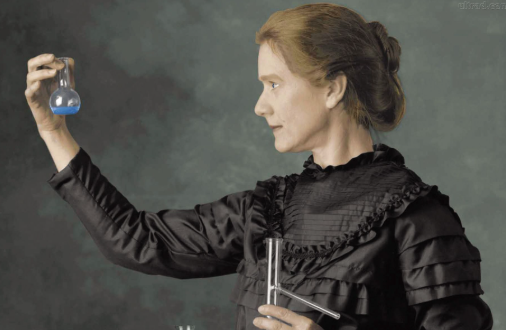
In the closing years of the nineteenth century, a French scientist opened his desk drawer and found something he did not expect — and from that moment humanity's understanding of matter changed forever. It turned out that certain elements emit energy entirely on their own, with no heat, no light and no external stimulus whatsoever. This is the story of radiation.
The beginning: three discoveries in three years
Röntgen and the unknown rays (1895)
The German Wilhelm Röntgen was experimenting with a cathode-ray tube he had covered with thick black paper when he noticed that a fluorescent screen metres away across the room began to glow. Something was passing through the paper and through the air. He named it X-rays, the letter X standing for the unknown. The first image he captured was of his wife's hand, showing her bones and her wedding ring clearly. It earned him the first Nobel Prize in Physics in 1901.
Becquerel and the accident in the drawer (1896)
The Frenchman Henri Becquerel, excited by Röntgen's discovery, wanted to test a hypothesis: do fluorescent salts emit X-rays after being exposed to sunlight? He wrapped a photographic plate in black paper, placed uranium salt on top, and waited for a sunny day. But the weather stayed cloudy, so he put everything away in a closed, dark drawer.
Days later, for whatever reason, he decided to develop the plate even though it had never been exposed to the sun — and found it heavily blackened. The Sun had played no part at all: the uranium itself was emitting penetrating radiation, spontaneously and permanently. That is how radioactivity was discovered, by pure accident — but by an alert eye that refused to dismiss an unexpected result.
Marie Curie and the new name (1898)
The Polish student Maria Skłodowska — Marie Curie — chose Becquerel's phenomenon as the subject of her thesis. She coined the term radioactivity and proved that it is an atomic property arising from inside the atom itself, not the result of a chemical reaction — a revolutionary idea at a time when the atom was believed to be indivisible and unchanging.
Marie Curie — the genius and the price
Marie worked with her husband Pierre Curie in an abandoned, cold and damp shed, processing tonnes of pitchblende ore by hand in huge vessels, because she had noticed that the ore was more radioactive than the uranium it contained — meaning it held an unknown, stronger element.
After years of effort she isolated two new elements: polonium (named after her homeland Poland, then under occupation) and radium. To extract a single gram of radium chloride she had to process tonnes of ore.
Nobel Prize in Physics, 1903
Shared with Pierre Curie and Henri Becquerel for research on radioactivity — she was the first woman to receive a Nobel Prize.
Nobel Prize in Chemistry, 1911
For the discovery of polonium and radium — making her the first person to win Nobel Prizes in two different sciences.
Marie and Pierre never patented their method for extracting radium despite its enormous commercial value, and Marie said that science belongs to all humanity.
Pierre Curie was killed in 1906 under the wheels of a horse-drawn carriage on a rainy street, and Marie took over his chair at the Sorbonne, becoming the first woman ever to teach there.
In the First World War she equipped ambulances with X-ray units, known as the "petites Curies", drove to the front herself, and helped image more than a million wounded soldiers to locate shrapnel.
But nobody knew the danger of radiation then: she carried tubes of radium in her pocket and kept them in her desk drawer to enjoy their blue glow in the dark. She died in 1934 of aplastic anaemia caused by long-term radiation exposure. And to this day — more than ninety years later — her notebooks are still radioactive, kept in lead-lined boxes and readable only with a signed waiver and protective clothing.
Types of radiation
Ernest Rutherford separated radiation by passing it through a magnetic field, where it split into three paths, and named them with Greek letters: alpha, beta and gamma.
| Type | What it is | Charge | Penetrating power | Stopped by |
|---|---|---|---|---|
| Alpha α | A helium nucleus (two protons + two neutrons) | +2 | Very low — a few centimetres in air | A sheet of paper or the skin |
| Beta β | A fast electron (or positron) | −1 or +1 | Moderate — a few metres in air | A few millimetres of aluminium |
| Gamma γ | A high-energy electromagnetic wave | Neutral | Very high — passes through the whole body | Thick lead or concrete |
| Neutrons | Free neutrons from fission | Neutral | Very high, and they make materials themselves radioactive | Hydrogen-rich materials (water, paraffin) |
Which is most dangerous to humans?
The answer depends on where the source is, and this is one of the most commonly misunderstood points:
- A source outside the body: the most dangerous are gamma and neutrons, because they penetrate the body and reach the internal organs. Alpha does not even get through the dead layer of skin.
- A source inside the body (inhaled or swallowed): the order flips completely, and alpha becomes by far the most dangerous. It is heavy and intensely ionising, dumping all its energy over a very short distance inside a single living tissue and destroying its cells and DNA in a concentrated way. This is why radon gas — an alpha emitter that is inhaled with the air — is the second leading cause of lung cancer after smoking.
The scale of radiation dose
The unit of effective dose is the sievert (Sv), which is a very large unit, so we normally use the millisievert (mSv) = one thousandth of a sievert.
| Dose | Situation and effect |
|---|---|
| 0.1 mSv | A chest X-ray |
| 2 – 3 mSv per year | The natural background every human receives (soil, space, food) |
| ~ 8 mSv | An abdominal CT scan |
| 20 mSv per year | The permitted limit for radiation workers |
| 100 mSv | The lowest dose at which a statistical rise in future cancer risk appears |
| 1000 mSv (1 Sv) | Acute radiation syndrome: nausea, vomiting and severe fatigue |
| 2000 – 4000 mSv | Bone-marrow damage, bleeding and hair loss — death likely without intensive treatment |
| 4500 mSv | Median lethal dose (LD50): kills half of those exposed within 30 days |
| More than 8000 mSv | Almost always fatal, whatever the treatment |
| More than 10000 mSv | Collapse of the nervous system — death within hours to days |
1) Time: reduce the duration of exposure. 2) Distance: move away — intensity falls with the square of the distance, so doubling the distance cuts the dose to a quarter. 3) Shielding: put a barrier suited to the type of radiation between you and the source.
The Geiger counter — an ear for the unseen
Radiation has no colour, no smell and no taste, and a human being cannot sense it at all — which is why inventing a detector was vital. Hans Geiger and his student Walther Müller developed the Geiger–Müller counter in 1928.
How it works: a metal tube filled with an inert gas (such as argon) at low pressure, with a thin wire at its centre held at a high voltage relative to the tube wall. When a radioactive particle enters it ionises the gas atoms, releasing electrons that accelerate towards the wire and ionise further atoms on the way in a chain avalanche, producing a short current pulse that is turned into the characteristic click or into a digital reading. The more intense the radiation, the faster the clicking, until it becomes a continuous buzz.
The most intensely radioactive and dangerous elements
Polonium-210
A powerful alpha emitter. Estimated to be hundreds of thousands of times more toxic than hydrogen cyanide when ingested, and undetectable by ordinary screening equipment.
Plutonium-239
A half-life of 24,000 years, extremely toxic when inhaled, and used in nuclear weapons.
Radium-226
Chemically similar to calcium, so it deposits in the bones and causes bone cancer — this is what killed the "Radium Girls".
Caesium-137
A gamma emitter that spreads easily through the environment and the food chain. One of the most dangerous residues of the Chernobyl and Fukushima accidents.
Iodine-131
Concentrates directly in the thyroid gland, which is why stable iodine is distributed after nuclear accidents to saturate the gland and block its uptake.
Radon-222
A radioactive gas that seeps from the soil into basements and homes — the largest natural source of human exposure.
In the 1920s young women worked in American factories painting watch dials with glowing radium paint, and would point the tips of their brushes with their lips for precision — without anyone telling them of the danger. Many developed cancer of the jaw and bones and died. But their famous legal case established the worker's right to know the hazards of the job, and became the cornerstone of occupational safety law around the world.
Uses of radiation
In medicine
- X-ray diagnosis and CT imaging to see bones and organs.
- Nuclear medicine: injecting radioisotopes such as technetium-99m to image the function of the heart, thyroid and bones.
- Radiotherapy: precisely aimed gamma rays to kill cancer cells, which divide faster and are more sensitive to radiation.
- Radioactive iodine therapy for thyroid disease and thyroid cancer.
- Sterilising surgical instruments and medical supplies with radiation, without heat that would damage them.
In industry
- Non-destructive testing: imaging pipe welds and aircraft structures to reveal internal cracks without dismantling them.
- Thickness and level gauging in paper mills, metal sheet production and packaging plants.
- Food preservation by irradiation to kill microbes and extend shelf life.
- Improving polymers and their durability through irradiation.
In technology and alarm systems
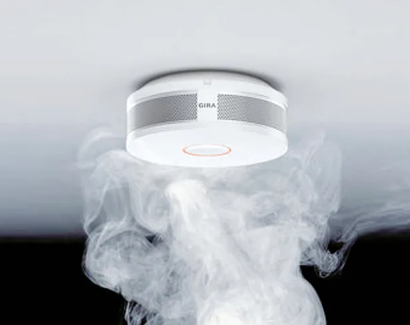
Inside an ionisation smoke detector is a minute quantity of americium-241 emitting alpha radiation. These rays ionise the air in a small chamber, so a weak steady current flows between its electrodes. When smoke enters, its particles attach to the ions and slow them down, the current is disrupted, and the device senses the drop and sounds the alarm.
The choice here is engineering at its best: alpha specifically, because it cannot even penetrate the plastic casing — effective inside the device and completely safe outside it.
- Nuclear batteries (RTGs): they power distant spacecraft such as Voyager and Curiosity, where sunlight is not enough.
- Carbon-14 dating: determining the age of archaeological remains and bones up to about 50,000 years old.
- Uranium–lead dating: measuring the age of rocks and of the Earth itself (4.54 billion years).
- Nuclear power: fission reactors that generate the electricity of entire countries with no carbon emissions.
In weapons — the dark face
The other face of this force is terrifying. On 6 and 9 August 1945 two atomic bombs were dropped on Hiroshima (uranium-235) and Nagasaki (plutonium-239), killing more than 200,000 people through the blast, the burns and the radiation, while the survivors — called hibakusha — went on suffering cancers, illness and deformities for decades afterwards.
Nuclear accidents added further chapters: Chernobyl in 1986, which emptied an entire city and whose zone remains closed to this day, and Fukushima in 2011, after the earthquake and tsunami.
"Nothing in life is to be feared, it is only to be understood. Now is the time to understand more, so that we may fear less."
— Marie Curie
Conclusion
Nuclear radiation is neither good nor evil in itself; it is a force, and a force takes the shape of whoever holds it. It is the same thing that reveals a fracture in your bone, kills a tumour in a patient's body, warns you of a fire in your house while you sleep, and powers a spacecraft drifting beyond the solar system — and it is the same thing that erased two cities from the map. The only difference between the two faces has a name: knowledge and responsibility.